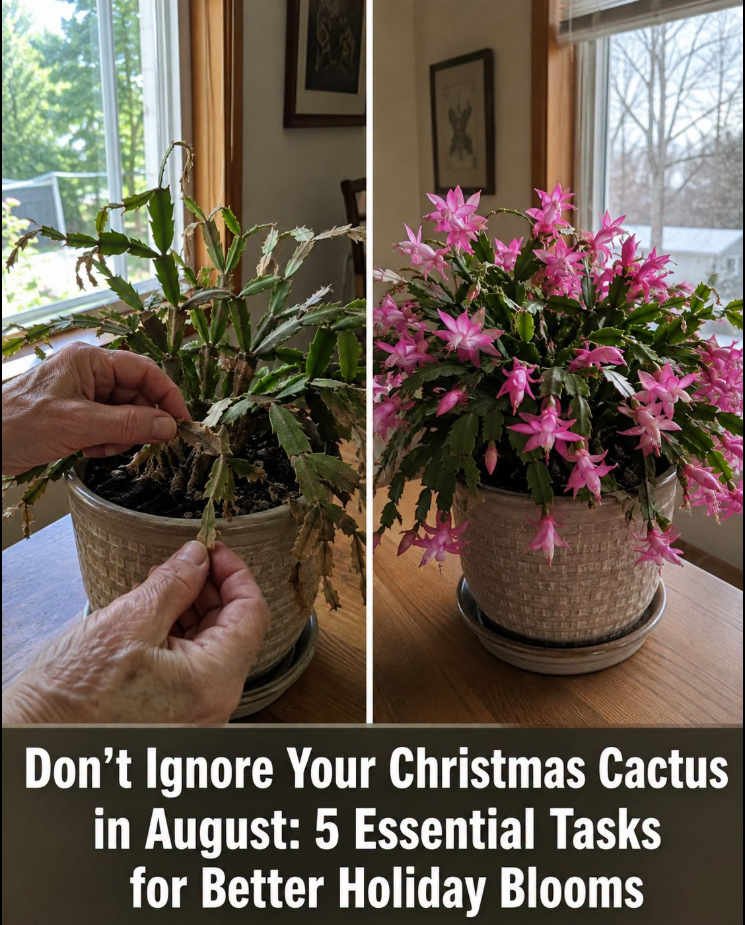
Flowering is triggered by environmental cues, particularly long nights and suitable cooler temperatures.
August is when you should start planning how you’ll provide those conditions.
The Importance of Darkness
As autumn approaches, Christmas cactus benefits from long periods of uninterrupted darkness.
A common target for encouraging buds is roughly 12–14 hours of darkness each night for several weeks, combined with appropriate temperatures.
This becomes especially important during fall.
And “darkness” really means darkness.
A plant sitting in a living room where lamps remain on until midnight may not experience the long nights it needs.
Even though natural daylight outside is decreasing, artificial indoor lighting can interfere with the signal.
Cooler Nights Help Too
Cooler fall temperatures also encourage bud formation.
Nighttime conditions around approximately 55–65°F (13–18°C) can be beneficial.
Avoid exposing the plant to freezing temperatures.
The goal is cool, not cold.
Why Think About This in August?
Because you need a plan before fall arrives.
Ask yourself:
Where will the plant spend September and October?
Will that room remain dark at night?
Is it next to a lamp or television that’s used every evening?
Can it receive bright daylight while still getting long, uninterrupted nights?
Solving these questions now makes autumn care much easier.
Bonus: Should You Repot Your Christmas Cactus in August?
Usually, don’t repot simply because you think the plant needs fresh soil.
Christmas cactus often performs well when somewhat snug in its container and doesn’t require annual repotting.
Repotting also temporarily disturbs the root system.
If the plant is healthy and its potting mix drains properly, leaving it alone as the blooming season approaches is often the better choice.
Repot When There Is a Genuine Reason
Consider repotting when:
Roots are severely overcrowded.
The potting mix has broken down badly.
Drainage has become poor.
Root disease requires intervention.
The container is damaged.
When routine repotting is necessary, doing it after flowering or during the active growing period usually gives the plant more time to recover before the next blooming cycle.
If Your Christmas Cactus Is Outside in August
Many Christmas cacti benefit from spending summer outdoors in suitable climates.
Outdoor conditions can provide excellent airflow, humidity, and natural temperature changes.
But placement matters.
Protect the plant from:
Harsh afternoon sunlight
Heavy prolonged rain
Waterlogged containers
Strong winds
Extreme heat
Slugs and other pests
Keep it somewhere bright but sheltered.
Don’t Bring It Inside Too Late
If your Christmas cactus spends summer outdoors, keep an eye on nighttime temperatures as late summer transitions into fall.
Christmas cactus appreciates cool conditions, but it is not frost hardy.
Bring it inside before frost threatens.
Inspect it carefully first so you don’t accidentally bring pests into your home.
The Biggest August Mistake: Trying to Force Blooms Too Early
Seeing holiday plants advertised can make gardeners eager to begin manipulating their Christmas cactus immediately.
But August is primarily about preparation, not forcing flowers.
The plant still needs healthy foliage and functioning roots.
Continue giving it appropriate moisture and light while gradually transitioning away from the active summer feeding routine.
The stronger the plant enters autumn, the better prepared it will be for the blooming cycle.
5 August Mistakes to Avoid
While completing your August care routine, avoid these common problems.
Mistake 1: Keeping the Soil Constantly Wet
Christmas cactus likes moisture but still requires oxygen around its roots.
Make sure excess water can escape.
Mistake 2: Treating It Like a Desert Cactus
Allowing the potting mix to remain completely dry for prolonged periods can cause stress.
Mistake 3: Leaving It in Harsh Afternoon Sun
Summer sunlight through a hot window or outdoors can damage the segments.
Mistake 4: Continuing Heavy Fertilization Into Fall
Late summer is the time to begin reducing fertilizer, not increasing it in hopes of forcing flowers.
Mistake 5: Waiting Until October to Think About Lighting
If your plant spends every evening beneath bright household lights, you’ll need to find a better location before the critical bud-forming period.
A Simple August Christmas Cactus Checklist
Before August ends, make sure you’ve handled these five priorities:
1. Water correctly.
Keep moisture relatively consistent without allowing the roots to remain soggy.
2. Check the light.
Provide bright, indirect light and protection from harsh afternoon sun.
3. Reduce feeding.
Begin winding down summer fertilization.
4. Inspect the plant.
Check for pests, damaged segments, drainage problems, and other signs of stress.
5. Prepare for fall.
Plan a location where the plant can eventually receive long nights and cooler temperatures needed for bud development.
What Happens in September?
September is when the transition becomes even more important.
Depending on your climate and the individual plant, you’ll gradually begin emphasizing the conditions associated with flowering:
Longer uninterrupted nights
Cooler temperatures
Reduced feeding
Careful watering
Minimal unnecessary disturbance
This doesn’t mean suddenly changing everything on September 1.
Plants respond to gradual seasonal changes.
Your job is simply to help reproduce those signals.
What Happens When Buds Finally Appear?
Once you see tiny flower buds forming at the tips of the segments, consistency becomes extremely important.
Avoid sudden changes in:
Temperature
Light
Watering
Location
Humidity
Christmas cactus is famous for dropping developing buds when stressed by abrupt environmental changes.
Keep conditions stable and allow the plant to finish what it started.
One More Important Detail: Is It Really a Christmas Cactus?
Many plants sold as “Christmas cactus” are actually Thanksgiving cactus (Schlumbergera truncata).
They’re closely related and their care is similar, but their natural flowering periods can differ.
Thanksgiving cactus generally flowers earlier, while the true Christmas cactus tends to bloom somewhat later.
So don’t panic if your plant flowers before Christmas.
It may simply be following the normal schedule for its species or cultivar.
Final Thoughts
August isn’t the month when your Christmas cactus puts on its spectacular holiday show.
But it can be one of the months that helps determine how well that show eventually turns out.
Think of August as the bridge between summer growth and fall bloom preparation.
Keep the roots healthy, provide plenty of bright filtered light, begin reducing fertilizer, inspect the plant carefully, and start preparing the cooler, darker fall environment that will encourage flower buds.
Don’t try to force flowers prematurely.
Instead, focus on creating a healthy plant that’s ready to respond when autumn provides the right signals.
A few thoughtful changes in August can help set the stage for a Christmas cactus covered in colorful blooms when the holiday season finally arrives.
Inspired by this? Share the article with your friends!