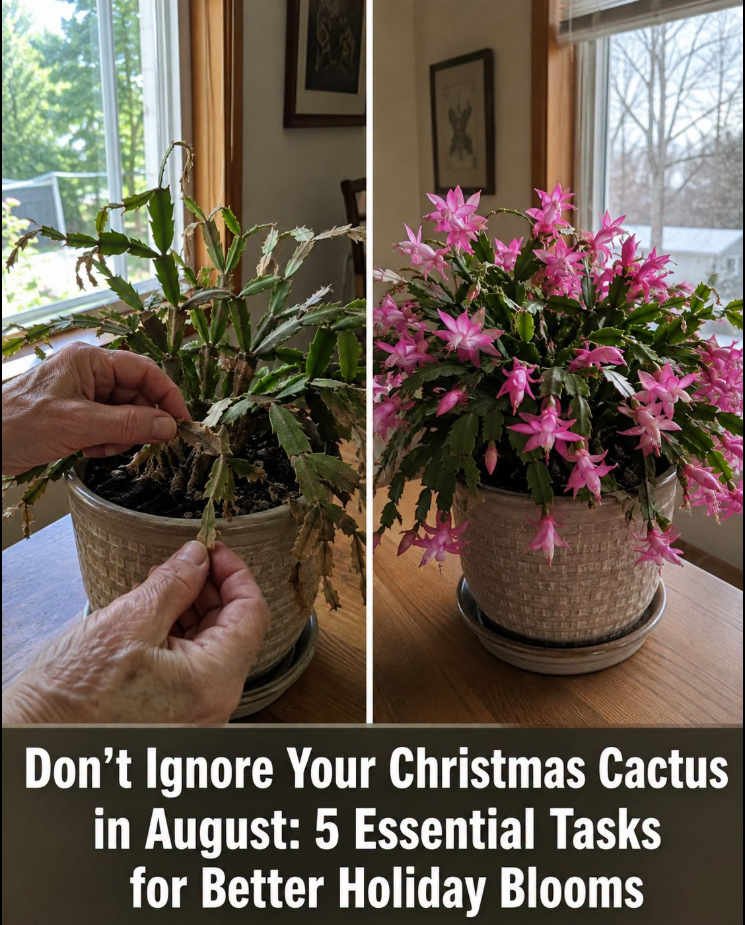
August might not seem like an important month for your Christmas cactus.
The holidays are still months away, there are usually no flower buds to admire, and the plant may simply appear to be producing green segments.
But beneath that quiet appearance, an important transition is beginning.
Late summer is when a Christmas cactus starts moving from vigorous summer growth toward the conditions that will eventually encourage flower bud formation. What you do now can influence how healthy the plant is when the critical fall blooming period arrives.
The goal in August isn’t to force flowers.
It’s to prepare a strong, healthy plant that will be ready to respond when cooler temperatures and longer nights arrive in fall.
Here are five essential August tasks that can make a real difference.
1. Adjust Watering as Summer Begins to Change
Christmas cactus is not a true desert cactus.
Unlike cacti that naturally grow in extremely dry environments, Christmas cactus (Schlumbergera) originates from humid forests of southeastern Brazil, where its ancestors grow on trees and rocks in environments with good drainage and regular moisture.
That means it doesn’t want to remain bone dry for weeks.
But it doesn’t want permanently soggy roots either.
What to Do in August
Check the potting mix before watering.
When the upper portion feels dry, water thoroughly until excess moisture drains from the bottom of the pot.
Then empty any water remaining in the saucer or decorative outer container.
Never leave the roots sitting in water.
During very hot August weather, plants growing outdoors may dry faster than indoor plants, so don’t follow a rigid watering schedule.
Check the soil instead.
Why This Matters
Constantly wet soil reduces oxygen around the roots and increases the risk of root rot.
Severe drought, on the other hand, can stress the plant and cause shriveled segments.
The goal is a simple cycle:
Water thoroughly → allow partial drying → water again.
Watch for These Warning Signs
Wrinkled or limp segments can indicate moisture stress.
However, don’t automatically assume the plant is thirsty.
A Christmas cactus with damaged roots from overwatering can also become limp because unhealthy roots can no longer absorb water efficiently.
Always check the soil before adding more water.
2. Give It Plenty of Bright Light Without Scorching It
Good light during late summer helps the plant photosynthesize and store the energy it will need later.
But Christmas cactus doesn’t generally appreciate hours of intense midday summer sunlight.
Strong direct sun can cause discoloration or scorching.
Ideal August Light
Aim for:
Bright indirect light
Gentle morning sunlight
Filtered outdoor light
Protection from intense afternoon sun
An east-facing window can work beautifully indoors.
If the plant spends summer outdoors, place it beneath a tree canopy, covered patio, or another location receiving bright filtered light.
What If the Segments Turn Reddish?
A reddish or purplish tint can sometimes indicate environmental stress, including excessive light.
Some coloration isn’t necessarily disastrous, but a sudden dramatic color change is a reason to check the plant’s conditions.
Move it slightly farther from intense direct sunlight and observe how it responds.
Don’t Put It in Deep Shade Either
Too little light can result in weaker growth and may leave the plant poorly prepared for flowering.
You want bright light without intense summer exposure.
3. Begin Reducing Fertilizer Toward the End of August
Spring and summer are active growth periods for Christmas cactus.
During this time, moderate feeding can support new segments and overall plant health.
But as summer ends, the goal begins changing.
You don’t want to keep pushing large amounts of tender vegetative growth just as the plant should soon begin transitioning toward its fall blooming cycle.
What to Do
If you’ve been fertilizing regularly through spring and summer, August is a good time to begin winding down the feeding schedule.
By late summer or early fall, stop routine fertilization as you begin preparing the plant for bud formation.
Resume appropriate feeding during the next active growing period.
Avoid Overfeeding
More fertilizer does not mean more Christmas flowers.
Excess fertilizer can:
Create salt buildup in the potting mix
Stress roots
Encourage unnecessary vegetative growth
Interfere with the plant’s natural seasonal rhythm
Christmas cactus benefits much more from consistent care than aggressive feeding.
4. Inspect, Clean and Shape the Plant Before Fall
August is an excellent time to give your Christmas cactus a careful inspection.
Once flower buds begin forming later, you’ll want to disturb the plant as little as possible.
Take advantage of late summer to identify problems now.
Check for Pests
Inspect the joints between segments and the undersides of growth.
Watch for:
Mealybugs
Spider mites
Scale insects
Mealybugs may appear as small white cotton-like clusters.
Scale may resemble tiny brown or tan bumps attached to the plant.
Spider mites can be difficult to see but may cause stippling, discoloration, or fine webbing.
Catching a small infestation now is far easier than dealing with a serious problem when the plant is covered in buds.
Remove Damaged Material
Remove segments that are:
Clearly dead
Broken
Diseased
Severely damaged
Use clean tools or carefully twist segments apart at their natural joints when appropriate.
Should You Prune in August?
Heavy pruning isn’t ideal when you’re approaching the fall bud-forming period.
Major shaping is generally better done earlier after flowering or during active growth.
However, removing damaged material and making very minor corrections is fine.
If the plant already has a healthy shape, leave it alone.
5. Start Planning the Fall Blooming Conditions
This is arguably the most important August task, even though much of the actual work happens later.
Christmas cactus doesn’t bloom simply because December arrives…