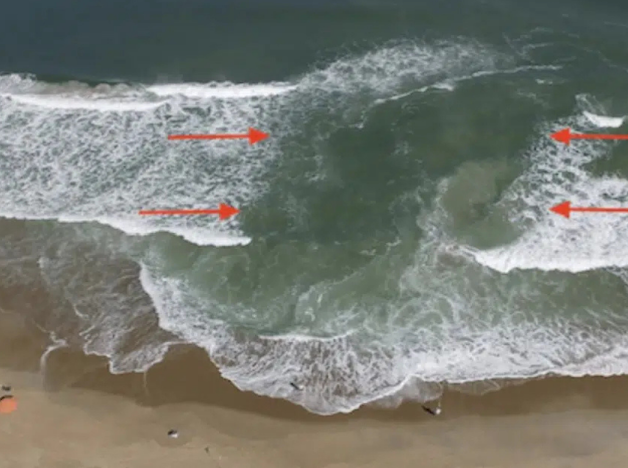
Patches of foam or debris moving steadily out to sea rather than toward the shore.
A distinct difference in water color, often appearing darker or murkier than the surrounding waves.
What to Do If You Get Caught
If you ever find yourself caught in a rip current, the most important thing to remember is: do not fight it. Swimming straight back to shore against a rip current is exhausting and can be deadly, even for the strongest swimmers.
Instead, the best course of action is to swim parallel to the shore. This allows you to escape the narrow channel of fast-moving water. Once you no longer feel the pull of the current, you can then swim back to shore at an angle away from the current.
The Reality of the Risk
Rip currents are more common than you might think. In the United States alone, lifeguards rescue tens of thousands of people from rip currents each year. They are particularly prevalent at beaches with stronger and more frequent waves, such as those on the East and West Coasts of the U.S. However, no coastline with breaking waves is immune to them.
Safety should always be your first priority. Pay close attention to beach flags and signs; they are not mere decorations. A red flag indicates high hazard conditions, while a purple flag warns of dangerous marine life. Knowing what each color signifies can be a lifesaver. Always swim at beaches with lifeguards present, and never overestimate your swimming abilities, especially in unfamiliar waters.
Finding Peace Through Knowledge
As for me, I know that recognizing the ocean for all its might and educating myself on the risks allows me to appreciate its beauty more safely. I might always be terrified of the water, but at least knowing about rip currents gives me tools to manage my fear.
I hope sharing this information gives you something useful, whether you are a seasoned swimmer or just dipping your toes in. As for me, I know I will certainly be sticking to the shallow water, or perhaps just enjoying the view of the ocean from a safe and comfortable distance.