Checking into a hotel room should feel relaxing, but taking a few simple precautions can help you feel safer and more comfortable during your stay.
Most travelers inspect the bathroom, closet, windows, and door locks as soon as they enter the room. However, one area is often overlooked: the space underneath the bed.
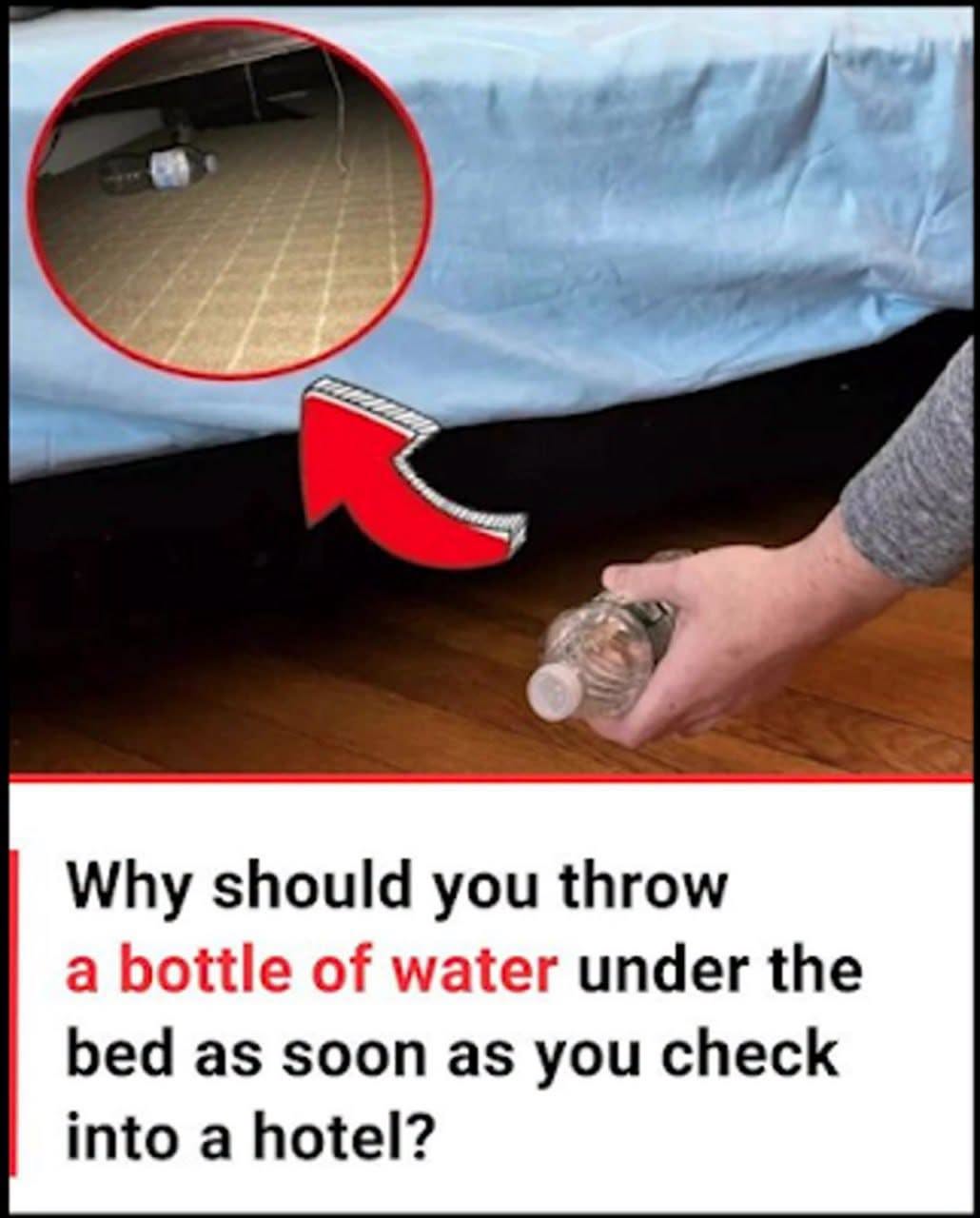
A popular travel tip suggests tossing a water bottle under the bed before bending down to inspect it. The idea is simple: if the bottle rolls freely across the floor and comes out on the other side, the space is probably clear of large obstructions.
If the bottle stops unexpectedly, fails to emerge, or you hear unusual movement, avoid reaching beneath the bed. Step out of the room and contact hotel staff or security for assistance.
How the Water Bottle Check Works
Stand several feet away from the bed and gently roll a closed water bottle underneath it.
Watch where the bottle travels.
If the space beneath the bed is open, the bottle may roll across the floor or become visible on the opposite side.
If it suddenly stops, there may be luggage, furniture supports, stored items, debris, or another obstruction beneath the bed.
This trick does not prove that a room is completely safe, and many hotel beds have solid bases that prevent anything from rolling underneath. It is simply a quick way to check an accessible space without immediately placing your face or hands near it.
Why You Should Avoid Bending Down Immediately
Leaning close to the floor limits your visibility and may place you in an uncomfortable position if you notice something unexpected.
Rolling an object first allows you to observe the space from a standing position.
If something seems unusual, leave the room calmly rather than attempting to investigate alone.
What a Stopped Bottle Might Mean
A bottle that does not roll through may have encountered:
A bed frame support
A solid bed base
Stored hotel equipment
Previous guests’ belongings
Trash or discarded items
Dust or accumulated debris
A pest trap
Another obstruction
Do not assume that every stopped bottle indicates danger. Many beds are designed with internal supports or enclosed platforms.
The goal is to identify anything that deserves a closer look from hotel staff.
Checking the Cleanliness of the Room
The space under a bed can reveal whether less-visible areas of the room have been cleaned properly.
You may notice:
Dust buildup
Food wrappers
Used tissues
Lost clothing
Empty bottles
Signs of pests
If the area appears dirty, take a photograph and notify the front desk.
You may request that the room be cleaned again or ask to move to another room.
The bottle trick can offer a quick first check, but a complete hotel-room safety inspection involves several additional areas that travelers often overlook.
A Simple Hotel Room Safety Check
Inspect the Door
Make sure the main door closes and locks properly.
Test the deadbolt, security latch, and peephole.
If any lock appears damaged or unreliable, contact the front desk immediately.
Check Connecting Doors
Some hotel rooms have doors connecting them to neighboring rooms.
Confirm that your side is locked securely.
Inspect the Windows and Balcony Door
Make sure windows and balcony doors close and lock.
This is especially important on lower floors or when traveling with children.
Locate the Emergency Exit
Find the emergency evacuation map, usually posted on the room door.
Identify the nearest stairwell and count how many doors are between your room and the exit.
This can help you navigate if smoke or darkness makes visibility difficult.
Check the Smoke Detector
Look for a visible smoke detector and make sure it does not appear covered, removed, or damaged.
Do not attempt to test or dismantle hotel safety equipment yourself.
Report concerns to hotel staff.
Inspect the Bed and Bedding
Pull back the sheets and examine the mattress seams, headboard area, and nearby furniture for unusual stains, dark spots, shed insect skins, or live pests.
If you suspect bedbugs, do not place luggage on the bed or upholstered furniture.
Leave the room and inform hotel management.
Keep Luggage Elevated
Use a luggage rack after inspecting it.
Keeping bags off the bed and floor may reduce exposure to dirt, moisture, and certain pests.
Avoid placing open suitcases directly against walls or upholstered headboards.
Check the Bathroom Floor
Look for standing water, loose tiles, slippery surfaces, or damaged fixtures.
Report leaks promptly because wet floors can create a fall hazard.
Store Valuables Securely
Use the room safe when appropriate, or keep valuables secured and out of sight.
Do not leave passports, money, electronics, or jewelry exposed near windows or doors.
Be Cautious With Unexpected Visitors
Do not open the door simply because someone claims to be hotel staff.
Use the peephole and call the front desk to confirm the visit if you were not expecting anyone.
What to Do if Something Feels Wrong
Trust your judgment.
If you notice unusual sounds, damaged locks, evidence that someone entered the room, suspicious objects, or anything else that makes you uncomfortable, leave the room with your belongings if it is safe to do so.
Contact the front desk, security personnel, or emergency services depending on the seriousness of the situation.
Do not search the room alone or confront another person.
A calm response is more useful than panic: step away, document what you noticed when safe, and let trained staff inspect the room.
Limitations of the Water Bottle Trick
The water bottle method is not a professional security test.
It cannot detect every object, device, pest, or safety concern.
It may not work when:
The bed has a solid platform base.
The floor is carpeted.
The bottle is too light to roll properly.
Furniture supports block the path.
The space beneath the bed is intentionally sealed.
The floor is uneven.
Use the trick only as one small part of a broader visual inspection.
Should You Search for Hidden Cameras?
Unauthorized recording devices in private hotel spaces are a serious concern, although they are not commonly found in ordinary hotel stays.
Do not dismantle smoke detectors, televisions, clocks, outlets, or hotel equipment while searching.
If you notice an object that appears altered, strangely positioned, or directed toward a private area, do not touch it.
Take a photograph from a safe distance, leave the room, and notify hotel management or local authorities.
Signs of a Poorly Maintained Room
Consider requesting another room if you notice:
Broken locks
Damaged windows
Strong mold or sewage odors
Visible insects or rodents
Wet carpets
Exposed electrical wires
Used bedding or towels
Unexplained stains
Large amounts of trash or debris
Traveling Alone
Solo travelers may benefit from taking a few additional precautions.
Avoid announcing your room number in public areas.
Do not write your room number on visible luggage tags.
Keep the door locked whenever you are inside.
Let a trusted person know where you are staying.
Keep your phone charged.
Know how to contact the front desk quickly.
Traveling With Children
Check the room for hazards at a child’s height.
Look for:
Uncovered outlets
Loose cords
Sharp furniture corners
Open balcony access
Cleaning products
Small objects that could be swallowed
Unsecured windows
Do not allow children to crawl beneath hotel beds or reach behind furniture…